
Autocomplete suggestions expedite the process of locating common searches. Yippy is a search engine that started in 2009, since then it has evolved. To become a leading provider of business learning and knowledge for all types of data users and consumers. This virtual bookstore is one of the oldest search engines on the internet.
Should You Go There? We Explore Dark Web Search Engines

So, after running a search, there will be the location, email addresses, social media profiles, and even additional criminal records at your service. Due to thoughtful and continuously updated algorithms of search, it is easy to find the necessary goods, content, or information. Using Not Evil, you can save a lot of time and keep total anonymity. “According to the researchers, only 4 % of the Internet is visible to the general public and the remaining 96% of Websites and Data’s hidden behind the Deep web”. Google will not provide Search results that aren’t indexed by the World Wide Web. If you don’t want Google to collect your personal information and your online activities you should maintain your Anonymity online.
THIS ARTICLE WAS FEATURED IN
That’s why knowing which dark web websites are safe to visit is vital. Individual profile viewing options for vendors & marketplaces are also available including details like ratings, mirror links, number of listings, and uptime percentage. This particular search engine was built by Hugbunt3r, a prominent member of the popular Dread service on the dark web. It aims to serve as a database through which users can search for products from different vendors in different marketplaces on the dark web.
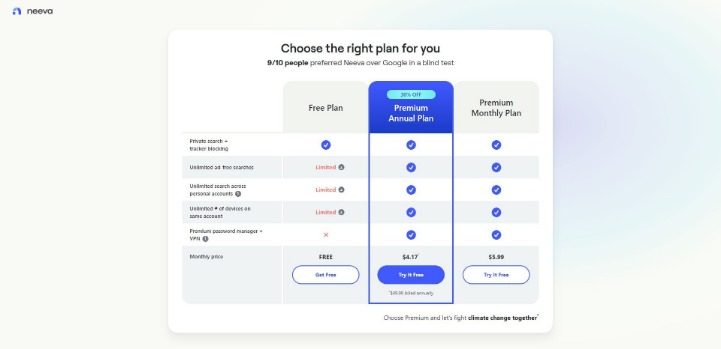
Securing Your Privacy And Safety With Dark Web Search Engines
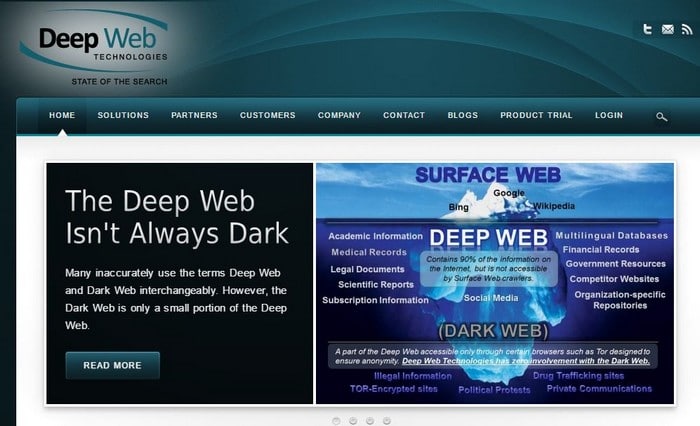
While the deep web comprises anything not indexed by standard search engines, the dark web is a small segment that requires special software like the Tor browser to access. This concealed layer of the internet offers a high degree of privacy, making it both a sanctuary for journalists and activists and a playground for illicit activities. Whereas the deep web is the part of the web not searchable by traditional search engines and requires special tools to access it. Also, you must log in or have a specific IP address or URL to access the deep web content. The dark web is part of the internet that is not indexed by standard search engines like Google, Yahoo, and Bing.
The Best Dark Web Search Engines In 2024
Regular search engines only provide results from the most recent version of a website that’s available. Alt Address provides disposable email addresses specifically designed for dark web use. This service helps protect your primary email when signing up for .onion services. I found it especially useful for testing new services without risking my main email address, though messages expire after 24 hours. This is just a gentle reminder to use it responsibly and ethically, respecting privacy and legal boundaries as you explore the depths of the web. You can assume that WorldCat is a search engine dedicated to unique materials and resources available only in libraries.
For example, Whonix’s virtual workstation machine connects to the internal virtual LAN. It can only interact with the gateway, the most effective method by which the browser protects user applications from learning a device’s IP address. Be sure that your experience with Whonix will be comparable to Tor because both programs share the same source code. While accessing the dark web using Mozilla Firefox is possible, you must first adjust its settings. To prevent detection, the program runs user data via a tiered stream before allowing access to the dark web.
The deep web includes things like password-protected websites, private databases, academic research, medical records, and government documents. These resources are not publicly available and cannot be accessed through traditional search engines. Instead, you need to use specialized tools and techniques to access them.
Is It Legal To Access Dark Websites?
Dark Search, characterized by its lightweight nature, forgoes certain convenience features. For instance, users must manually copy and paste links instead of directly clicking them. In summation, it delivers rudimentary but efficient searches fortified by an unwavering commitment to anonymity.
How To Hide IP Address In 2025 (A Comprehensive Guide)
It’s usually ransomware groups that use onion.ly links because when a victim’s device is infected with ransomware, they are directed to a dark website that contains the ransom demand. The victim can access this onion.ly website with their regular browser. The reason you can’t simply search for dark web content on search engines like Google while using browsers like Chrome is that they do not have dark net access. As most users of popular search engines don’t use dark net software, popular search engines simply don’t crawl for them. While technically not a search engine, we’re including The Hidden Wiki for its helpfulness in exploring the dark web.
Needless to say, it takes your data much longer to travel this way, which means dark web links load slowly compared to indexed sites. Yippy is a Deep Web search engine that is designed to provide users with a comprehensive and organized search experience. It uses a clustering algorithm that groups search results into categories, making it easier for users to find what they are looking for. One of the advantages of using Candle is that it has a user-friendly interface that makes it easy to search for specific content.
But there’s a twist—it is one of the few dark web search engines that is available on the regular web. Of course, any links and results will not be openable unless you have the Tor browser installed on your computer. Unlike Google, Pipl can interact with searchable databases, member directories, court records, and other deep internet search content to offer you a detailed snapshot of a person. It searches databases, member directories, court records, and more to share information relevant to a person. Simply put, it pulls information from the deep web, something traditional search engines can’t do.
- The dark web is an unknown hidden part of the internet that cannot be accessed with default browsers.
- Google will not provide Search results that aren’t indexed by the World Wide Web.
- To maximize LibreY’s potential, access it through the Tor browser for enhanced security.
- Some visitors simply enjoy the anonymity and might just join an online chess club there or Blackbook, the social networking site exclusively for the dark web.
- Posts on controversial or even illegal topics are fair game, so the Tor website is a double-edged sword.
It boasts an extensive index of over a million pages, making it a go-to tool for exploring the invisible web. Torch excels at providing comprehensive search results, whether you’re looking for academic resources, forums, or other hidden services. Its straightforward interface ensures that you can navigate the platform with ease, even if you’re new to accessing the dark web. In this strange realm, anonymity rules supreme, allowing users to view content not available on the mainstream web, browse hidden websites, and interact safely. Darknet search engines are specialized tools that can be used to efficiently browse this covert environment. The darknet is navigated and organised by these advanced search engines, which makes it simpler to find unlisted websites and resources.
DarkNetLive
To look at it in a different way, it makes up between 90% and 95% of the internet. Onion sites are considered part of the deep web because search engines like Google and Bing can’t index them. Onion sites (aka Tor sites) are websites only accessible on the dark web; you can’t view them using a regular browser. Their URLs (aka dark web links) have .onion as the domain, instead of the common surface web domains like .com or .net. Many hidden deep web search engines offer customizable search options that allow users to refine their searches based on specific criteria.
A network browser gives you access to sites with the ‘.onion’ registry operator. For instance, services like ProtonMail and SecureDrop (mentioned above already) have hidden sites for their users who live in countries with high levels of censorship. Hence, you never know when a popular .onion site is going to vanish, or even die. Though it’s still helpful, a static list isn’t enough (we try to keep our own, the one above, up-to-date, though). The best thing is to actually understand how to find the fresh, new links.
Their tagline is “search the world’s historical newspaper archives” and it truly stands by it. They are continuously adding more newspapers every day and this certainly gives them a place on our list. It’s a digital time machine, preserving the evolution of websites, content, and design over time.