To counter this, dark web monitoring has become essential to detect these threats and safeguard digital privacy. From information security threats like identity theft and malware to scams and surveillance, navigating the dark web without caution can lead to real dangers. So, is the dark web a lawless underworld or a misunderstood frontier for privacy and free expression? A large portion of activities on the dark web involve illegal content, transactions, or services. Simply accessing certain sites or engaging with the wrong links could implicate you in criminal investigations.

Drugs: The Flagship Category
Malicious software — i.e. malware — is fully alive all across the dark web. It is often offered in some portals to give threat actors the tools for cyberattacks. However, it also lingers all across the dark web to infect unsuspecting users just like it does on the rest of the web. In case you’re wondering how to access the deep web, chances are you already use it daily. The term “deep web” refers to all web pages that that are unidentifiable by search engines.
The Tor Metrics is a good place to get more information about the Tor project. It collects data from the public Tor network and archives historical data of the Tor ecosystem. In most cases, whistleblowers have sensitive information about the government or a company. They can be easily traced and even prosecuted if they share the information on the surface web.
What Is The Dark Web? Here’s Everything To Know Before You Access It
The sellers are wary of being infiltrated by law enforcement, so don’t let just anyone in. Tor itself is protected by the First Amendment and no federal law bans anonymous browsing. However, transactions involving controlled substances or hacking tools trigger the Controlled Substances Act, the Computer Fraud and Abuse Act and the Money Laundering Control Act. Maintaining anonymity is a continuous process, not a one‑time setup. Always remember that while the above measures significantly reduce risks, no method guarantees complete security on the dark web. Always exercise extreme caution and verify the legality of any services you access.
Search Engines
Here are 3 sites to help you browse this hidden part of the internet. Keep in mind that this isn’t an exhaustive list of dark web sites. China, for example, blocks access to the Tor network entirely, treating it as a tool for bypassing government controls. To get around these restrictions, the Tor network offers an option called bridges.
Should I Only Use A VPN To Access The Dark Web?
Each category carries risks of devaluing enterprises through reputational damage, disrupting operations via malware attacks, or defrauding companies through theft of critical information. The dark web resembles the early days of the internet—rough and transient. Some well-established sites and services have stuck around, but the anonymous and deliberately hidden nature of the dark web makes it a hub for privacy advocates, researchers, and criminals. Your ISP can’t see which websites you’re visiting on the dark web when you’re using Tor, but they might be able to predict or assume you are using Tor if they analyze your monitored internet traffic. There are multiple search engines on the dark web that can help you find what you’re looking for.
There are also millions of servers which only store data which can’t be accessed via a public web page. Data brokers such as LocalBlox for instance crawl the web and store information about business and consumers to sell for marketing purposes. This could include sites not automatically available to the public, such as those which require a password. Examples of this might be e-mail accounts or registration-only forums. The books are there, they’re precisely organized by theme and title, and you’re free and able to look everywhere.
- That’s why the safest recommendation is to treat every interaction as high risk, even if it looks harmless on the surface.
- Accessing the dark web isn’t as straightforward as browsing the clear web.
- Instead, it uses its own search engines – we’ll get to that later.
- The dark web, which is what I’m discussing here, is a small subset of the deep web, and refers to websites that are specifically trying to stay out of sight.
- And if you have no idea what to do if your identity is stolen, Aura has your back.
- Learn the risks, why identity is the new perimeter, and how monitoring protects your data.
VPN‑Only Browsing

Whereas the deep web is the part of the web not searchable by traditional search engines and requires special tools to access it. Also, you must log in or have a specific IP address or URL to access the deep web content. However, there are plenty of legal and legitimate online activities that require privacy and anonymity.
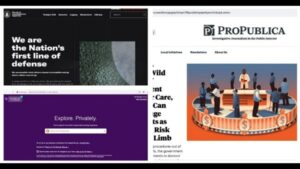
With your device running a Tor browser, you can go to Tor-specific sites – those with an .onion suffix — or also visit the usual sites on the open web. The connection between Tor’s dark net and the regular internet is bridged via an ‘exit node’. Any internet traffic leaving the exit node is no longer part of Tor’s dark web.
- They rely on it for anonymous, secure communication to avoid surveillance or censorship.
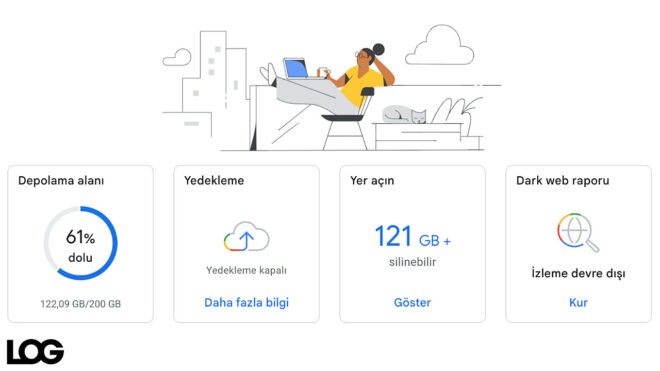
- Even data which is not used for ads, such as Gmail data, is still collected and could therefore be leaked in a breach or government data request.
- Today, TOR is maintained by a nonprofit organization and continues to serve as a critical tool for online anonymity.
- Another important difference is that connections aren’t unidirectional.
- Raji Oluwaniyi is a well-rounded content creator who enjoys researching, writing, and editing a wide variety of content with minimal oversight.
- There’s legitimate activity on the dark web too, as activists, journalists, and whistleblowers use dark web forums for anonymous communication.
Related Content
In oppressive regimes, the Dark Web has served as a sanctuary for truth. For cybersecurity operatives like myself, it’s a lens into adversarial evolution – a playground for threat modeling. The dark web can be a dangerous place and may not be for everyone. There are also some excellent ways to protect your privacy from most bad actors.
Typically, any reference to the visible web will be to common websites with a familiar internet domain extension. Google considers the majority of the content on the entire web highly irrelevant and useless to its users. That’s why such a large percentage (as much as 94%) of the entire web is not returned in Google Search. If you decide to venture into the dark depths of the deep web, make sure you’ve bolstered your device’s security with powerful privacy and security tools that can defend against dark web threats. People use it to connect with others who share their interests, whether those interests are political, artistic, or personal.
Cryptocurrency miners and other malicious software often target dark web users. Using a reliable antivirus to scan your device is worthwhile if you spot suspicious spikes in system resource usage. KeyBase combines encrypted messaging with secure file sharing and identity verification. Its dark web version provides the same functionality as the clear web option, while adding Tor’s anonymity layer. I don’t recommend seeking out dark web content unless you have a specific reason to do so.
Operational Security: Staying Anonymous
From search engines to messaging apps, browsers to cloud storage, other European alternatives can give you the tools to take back control. We founded Proton in Switzerland in 2014 specifically to resist mass surveillance and abuse of personal data by US tech companies. We offer this feature primarily as a convenient way to access onion sites using your regular browser, and it does offer some security advantages over using Tor Browser. Still, if security is important to you, we strongly recommend reading through the Tor Project’s official advice on using Tor and VPNs together(new window).
The Dark Web: Myths, Realities, And How It’s Shaping The Future Of Cybersecurity
First, let me explain that this article is intended for users who want to use the dark web for legal and needed purposes, such as finding censored news, blocked websites, and other much-needed services. Unlike the publicly accessible surface web, the deep web includes sites requiring login credentials but is still accessible via traditional browsers. The dark web is a small, hidden subset of the deep web that requires special tools to access.
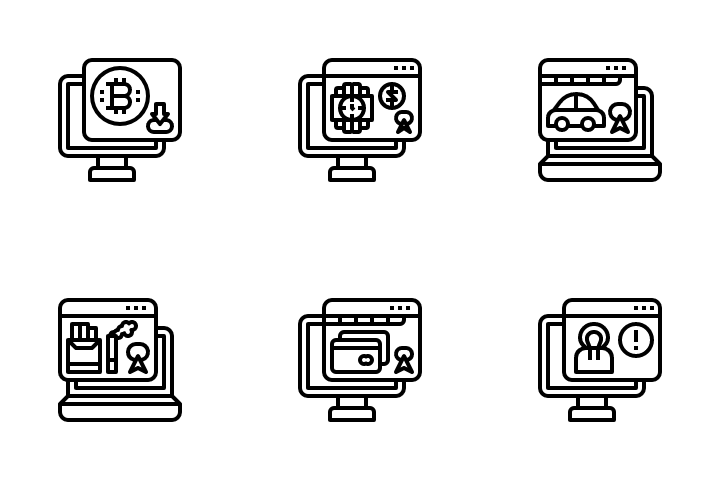
For cybercrime specifically, there are three key pillars—services, distribution, and monetization—and each plays a critical role in driving business forward. Cybercrime continues to form its own economy, with organized groups and service-based criminal enterprises. As you might expect, Bitcoin is the top cryptocurrency being used on the Dark Web. Chainalysis says that $790 million worth of cryptocurrencies were used to shop in darknet markets during 2019.
In February 2011 Ross Ulbricht founded what is believed to be the dark web’s first black market, Silk Road. The U.S. Federal Bureau of Investigation (FBI) arrested Ulbricht in October 2013, but imitators still arise, many much larger. Cybercriminals often use the Dark Web as a platform for data breaches, identity theft, and fraud. Stolen databases from large corporations and government agencies are frequently sold to the highest bidder.
Part of what makes the dark web the dark web is that you can’t access it through your normal web browser, nor can you look something up on it via a Google search. The dark web, which is what I’m discussing here, is a small subset of the deep web, and refers to websites that are specifically trying to stay out of sight. You can conduct discussions about current events anonymously on Intel Exchange. There are several whistleblower sites, including a dark web version of Wikileaks. Pirate Bay, a BitTorrent site that law enforcement officials have repeatedly shut down, is alive and well there. Though not entirely shoddy, the dark web has a reputation for hosting illegal activities.